COM interface
COM interface is also called serial port. Most motherboards in the past provided two COM ports, COM1 and COM2. The role of the COM interface is to connect devices such as a serial mouse and an external Modem.
The 1/O address of the COM1 interface is 03F8h-03FFh, and the interrupt number is IRQ4; the 1O address of the COM2 interface is O2F8h-O2Fh, and the interrupt number is IRQ3.
Therefore, the COM2 interface has priority over the response of the COM1 interface. Later, serial devices such as mice adopted the PS2 interface and the currently popular USB interface, and external devices based on serial ports are rare.
USB interface
The full name of USB is Universal Serial Bus, which means "Universal Serial Bus" in Chinese. USB was jointly proposed by Intel, Compaq, IBM, Microsoft and other companies at the end of 1994. USB supports hot-plug, and its plug-and-play advantage makes it the most important interface method for computers.
The USB interface has 4 pins, which are the USB power supply (usually 5V), the USB data line +, the USB data line and the ground line.
USB has two specifications, namely USBI.1 and USB2.0.
The transfer rate of the high-speed mode of USBI.1 is 12Mbit/s, and the transfer rate of the low-speed mode is 1.5Mbit/s, 1Mb/s=8 Mbit/s, and 12 Mbit/s=l .5 MB/s.
The USB2.0 specification is evolved from the USBI.1 specification. Its transmission rate reaches 480Mbit/s, which is converted into MB to 60MB/s, which is enough to meet the rate requirements of most peripherals. The Enhanced Host Controller Interface (EHCI) in USB2.0 defines a framework compatible with USB1.1, which can drive USB.1 devices with USB2.0 drivers. That is to say, all devices that support USB1.1 can be used directly on the USB2.0 interface without worrying about compatibility issues, and accessories such as USB cables and plugs can also be used directly.
The USB2.0 standard further increases the interface rate to 480Mbit/s, which greatly shortens the transmission time of video and audio files in LCD color TVs.
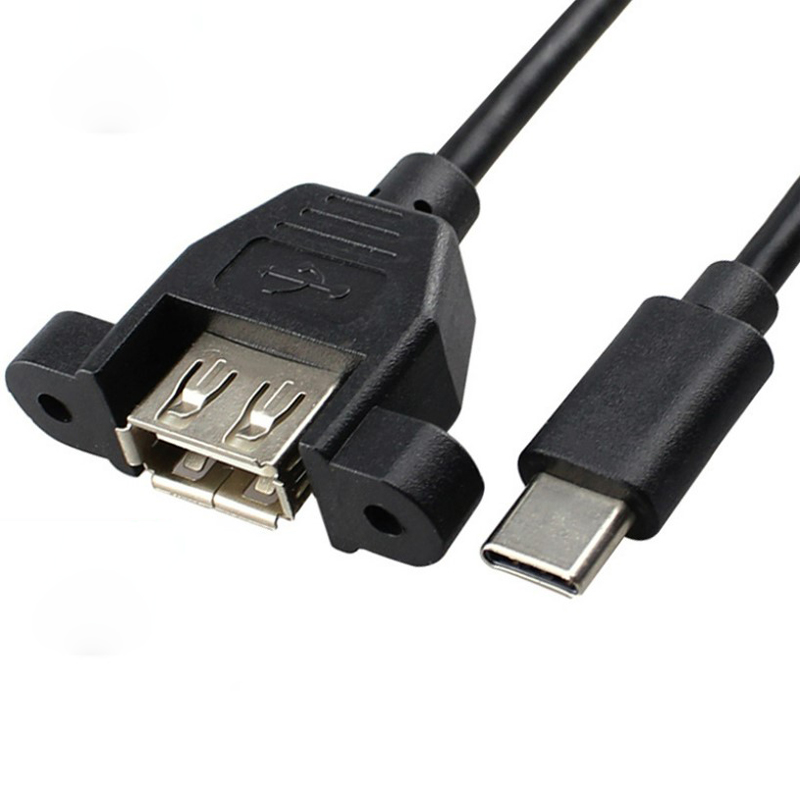
Type-C interface
Type-c is an epoch-making interface type that can be applied to both PCs (master devices) and external devices (slave devices, such as mobile phones).
Micro-USB interface
Micro-USB is a USB2.0 standard interface, the next version of Mini-USB.
Its features are as follows:
Micro-USB connector is smaller than standard USB and Mini-USB connector, saving space; with up to 10,000 times of plugging life and strength; blind-mate structure design; compatible with USB1.1 (low speed: 1.5Mbit/s, full speed: 12Mbit/s) and USB2.0 (High Speed: 180 Mbit/s); simultaneously provide data transfer and charging.
We focus on DC connector, DC jack, audio jack and OEM molding cable assembly like DC cable, aux cable, USB A cable, USB B cable, micro USB cable, mini USB cable, USB type C cable and OEM electronic wire harness, plastic part, metal part and other. Our product are widely used for monitor, router, computer, mobile phone, adapter, earphone, solar product, Led and others.